X-ray Inspection of Common BGA Defects: Short Circuits, Open Circuits, Misalignment, and More
Identifying Short Circuits
One of the most common BGA defects is a short circuit, which occurs when solder balls form unintended connections. In an X-ray image, this appears as two or more solder balls fused together. Such bridging can cause short circuits that may lead to serious failures in the finished product.
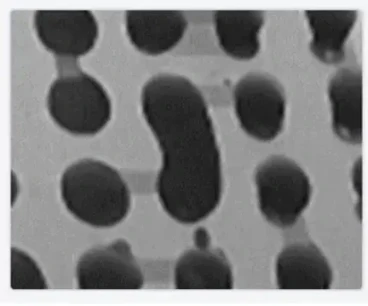
[Example of a BGA component with short circuits between solder balls]
Root causes:
1. Stencil issues: An excessively large aperture or a damaged stencil can deposit too much solder paste, leading to short circuits.
2. Solder mask defects: If the solder mask intended to prevent solder flow between balls fails, unintended connections may result.
3. Stand-off height issues: An incorrect gap between the BGA and the printed circuit board (PCB) can cause excess solder to form bridges.
When diagnosing these issues, inspect the X-ray image for signs of excess solder or solder-ball bridging.
Detecting BGA Open Circuits
An open circuit occurs when a solder ball fails to make proper contact with the PCB pad. In an X-ray image, this manifests as a missing solder ball or a visible gap between the BGA and the PCB. Missing or incompletely connected solder balls cause open circuits that impair the board's functionality.
Root causes:
1. Stencil defects: A faulty stencil can result in insufficient solder paste deposition.
2. Improper soldering process: Incorrect reflow parameters or contamination can prevent proper wetting.
To identify an open circuit, look for gaps or missing solder balls in the X-ray image. Absent solder on a BGA pad indicates an open circuit.
Addressing Solder Mask Defects
The solder mask is designed to control solder flow and prevent bridging between pads. However, defects in the solder mask can cause abnormal solder flow. X-ray inspection reveals these issues by showing excess solder or bridging between solder balls.
Root causes:
1. Solder mask defects: A damaged or improperly applied solder mask may fail to contain solder.
2. Misaligned solder mask: Misalignment during application can allow solder to bleed out.
Identifying BGA Misalignment
BGA misalignment occurs when the component fails to align correctly with the PCB during soldering. This offset can cause a range of issues, including uneven solder balls and potential electrical short circuits.
BGA Solder Position Inspection
During reflow soldering, misalignment arises if the BGA component does not precisely match the pad positions on the PCB. This can lead to problems such as uneven solder-ball heights, abnormal ball shapes, and even electrical short circuits.
Root causes:
1. Placement errors during assembly: The BGA is not correctly positioned before soldering.
2. Uneven solder application: Inconsistent solder deposition can exacerbate the problem.
Inspect the X-ray image for signs of misalignment, such as uneven solder-ball shapes or stretched balls. These may indicate a BGA placement or soldering issue.
Detecting BGA Defects Using 2.5D X-ray Views
A 2.5D X-ray view provides an oblique angle that helps detect hidden defects such as solder voids or incomplete connections more effectively. This perspective reveals issues that may not be visible in standard top-down X-ray images.

[Head-on-Pillow (HoP) defect — X-ray inspection result]
Examples:
1. Head-on-Pillow (HoP) defect: This defect occurs when a solder ball floats above the PCB pad and can be difficult to detect without a 2.5D view.
2. Inconsistent solder fill: Variations in solder fill are more readily apparent in a 2.5D view, highlighting potential defects.
Effective BGA X-ray inspection is critical for ensuring the reliability of electronic assemblies. By understanding common defects—such as short circuits, open circuits, solder mask issues, and misalignment—and leveraging advanced X-ray techniques like 2.5D imaging, you can improve the quality and performance of your assemblies. Regular inspection and maintenance of X-ray equipment, combined with careful observation, will help you identify and resolve defects before they affect the final product.