X Ray Tube: Reading Voltage, Current, and Focal Spot Specifications
When comparing an x ray tube for industrial inspection, a single headline specification tells only part of the story. Tube voltage, current, power, and focal spot size interact with the sample, detector, and imaging geometry. Their practical value is whether the required internal feature can be distinguished under realistic inspection conditions.
Voltage and current change different things
Tube voltage, usually stated in kilovolts, determines the maximum photon energy and influences the energy spectrum. A higher setting can improve penetration through thicker or denser regions, but it may change material contrast. Tube current controls electron flow and influences X-ray output at a given voltage. Increasing current can improve photon statistics for a fixed exposure, within the source's operating limits.
Voltage multiplied by current gives the electrical tube power. Do not assume the listed maximum voltage and maximum current are available simultaneously: the permitted combination depends on the manufacturer's operating envelope. Power ratings also need to be compared using the same definitions.
Read focal spot size alongside operating power
A smaller focal spot can reduce geometric unsharpness, particularly at higher magnification. However, the spot size may vary with power and operating mode. A minimum spot specification does not guarantee the same spot at every setting, and it is not the complete system resolution. Detector sampling, motion, contrast, and image noise also matter.
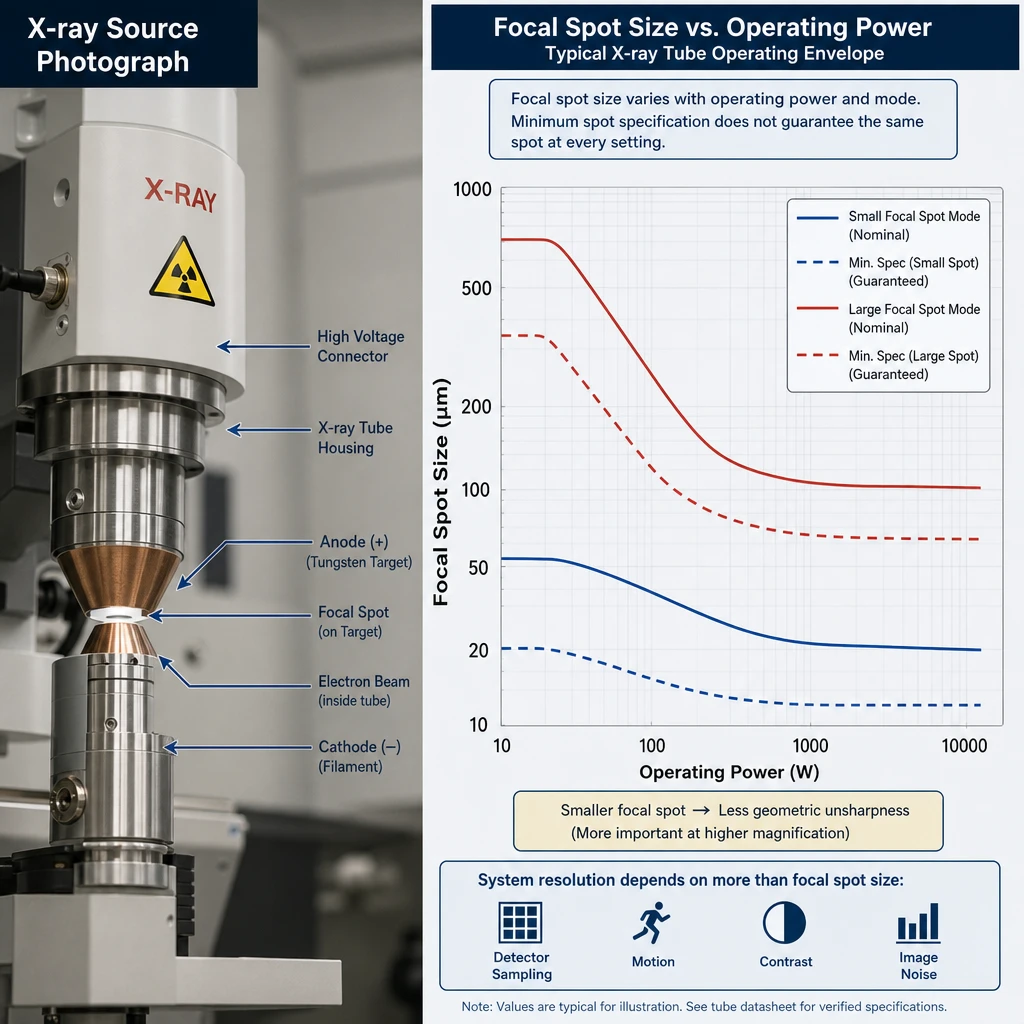
X-ray source photograph
For an equipment discussion with Shenzhen Wahfei Technology Co.,Ltd., provide the material, thickness range, target feature, and required inspection time. A representative sample evaluation can then connect the source specifications to useful image evidence. Confirm the available source and operating limits against the selected system's technical documentation.