Connector Inspection Systems: Matching Each Check to the Evidence Needed
Connector inspection systems should be matched to the evidence required from the assembly. An exposed terminal, an electrical path, and a connection hidden inside a housing present different questions. A useful inspection plan assigns each question to a suitable method instead of treating one image or test result as proof of overall connector quality.
External condition and electrical behavior need different checks
Visual inspection or machine vision can assess accessible features such as terminal presence, orientation, and visible housing damage. Electrical tests can evaluate specified properties such as continuity or contact resistance; insulation tests address a different set of requirements. A continuity result establishes a path under the test conditions, but does not describe the complete geometry of the hidden connection.
X-ray adds evidence about hidden structure
X-ray imaging can support review of internal terminal position, conductor arrangement, or hidden joint structure where material contrast and geometry permit. For example, a conductor may be present and electrically connected while its insertion or arrangement differs from the intended construction. A projection may help investigate that difference, although overlap and dense material can limit what is distinguishable.
An X-ray image alone does not measure contact resistance, insulation performance, or mechanical retention. Where retention strength is the concern, an appropriate mechanical test provides evidence that an image cannot supply. CT may be considered when overlapping structures leave the internal location unresolved, subject to sample validation and equipment capability.
When discussing connector inspection with Shenzhen Wahfei Technology Co.,Ltd., identify the hidden feature, housing materials, and unresolved quality question. Pair suitable X-ray evidence with the electrical, visual, or mechanical checks required for the product. This keeps the inspection conclusion tied to what was actually observed or measured.
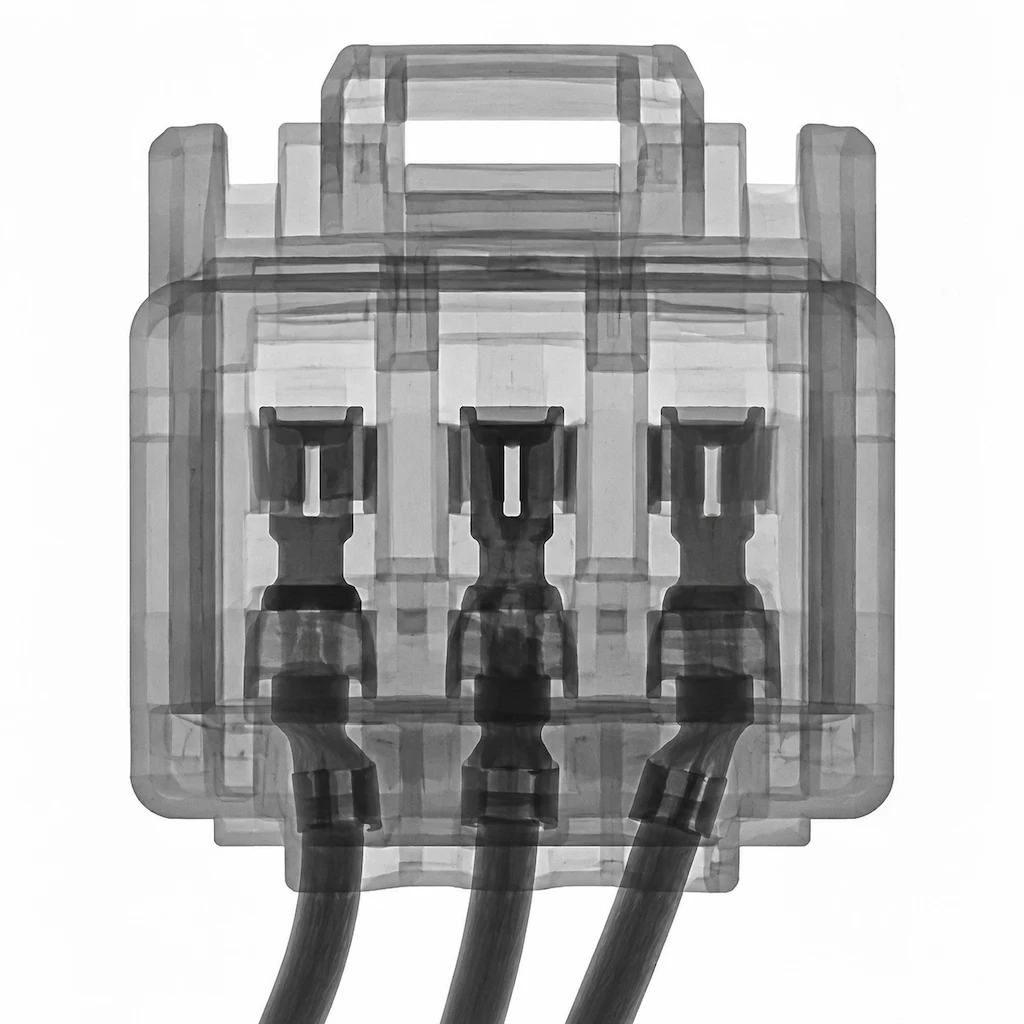
X-ray image of a connector's internal terminal or conductor arrangement.