



How to choose a casting X-ray manufacturer? Evaluate radiographic setup design capability
- Pubdate 2026-03-18
Non-Destructive Testing of Casting Defects: How to Select the Proper X-Ray Radiographic Setup to Ensure Detection Rate
In modern industrial manufacturing, the quality of castings directly affects the safety and performance of final products. Traditional film radiographic inspection has many drawbacks, including low efficiency, high labor intensity, high material cost, difficulty in film storage, and environmental pollution. With the rapid development of electronic information and computer technologies, digital imaging technology for X-Ray inspection of castings has advanced significantly.
Digital radiographic imaging technology not only provides high inspection speed and low cost, but also supports computer-based image processing, digital storage and transmission, as well as intelligent evaluation. Especially when combined with artificial intelligence, the introduction of X-Ray digital imaging enables fast and precise automated inspection of casting products. As a result, digital radiography is gradually replacing traditional film-based inspection and becoming the industry mainstream.
I. Basic Principles for Selecting Radiographic Setup
To ensure a high defect detection rate and meet image quality requirements, the radiographic setup must be selected based on the structural characteristics and technical requirements of the casting. The fundamental principle is: single-wall radiography should be preferred; double-wall radiography should only be considered when single-wall radiography is not feasible.
II. Detailed Explanation of Single-Wall Radiographic Setup
1. Single-Wall Radiography for Flat Castings
For flat castings with relatively simple structures, a single-wall radiographic setup can provide clear images of internal structures.
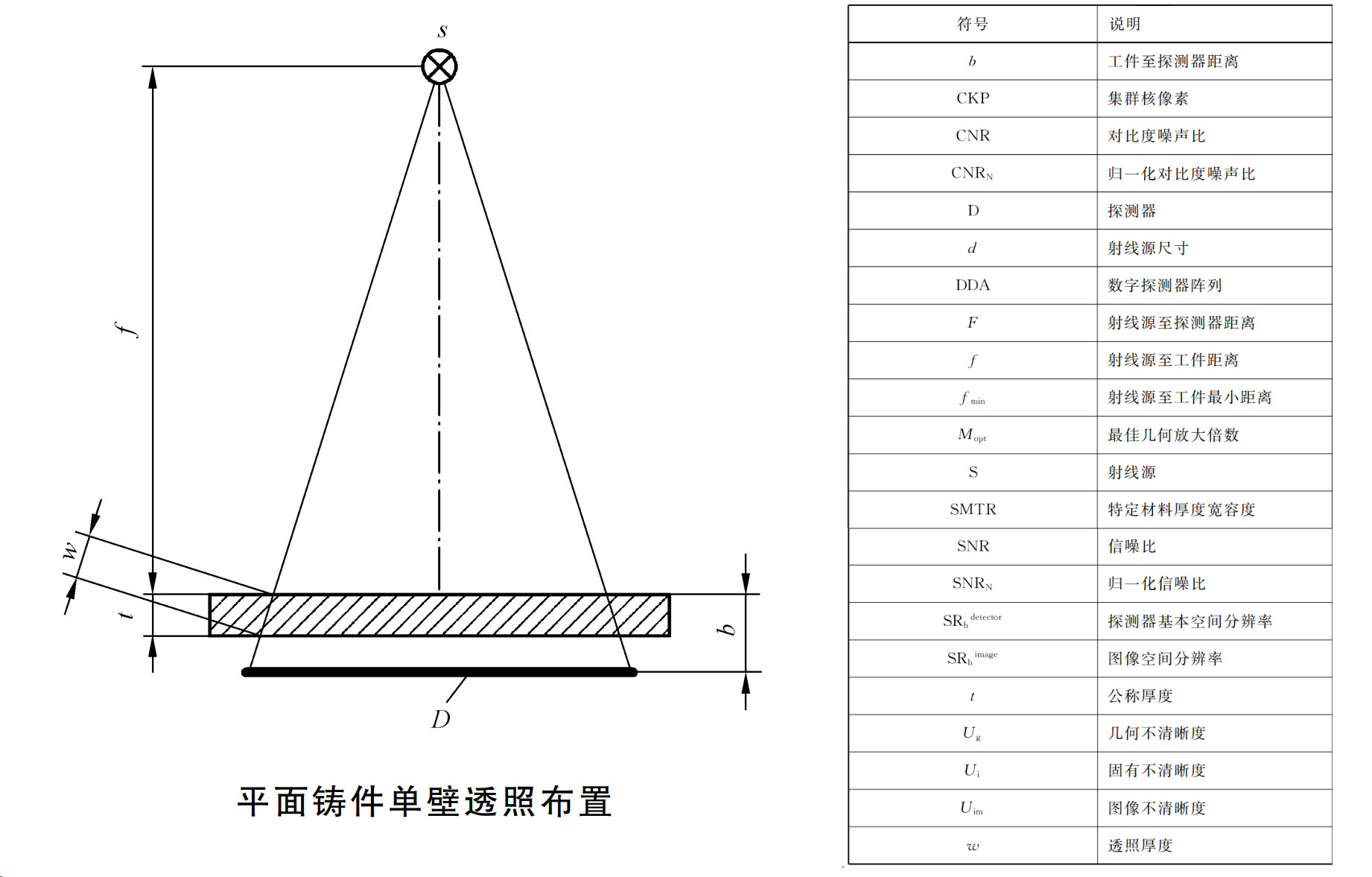
Fig.1: Single-wall radiographic setup for flat castings
2. External and Internal Single-Wall Radiography for Curved Castings
For curved castings, based on the relative positions of the radiation source and detector, radiography can be divided into external and internal setups.
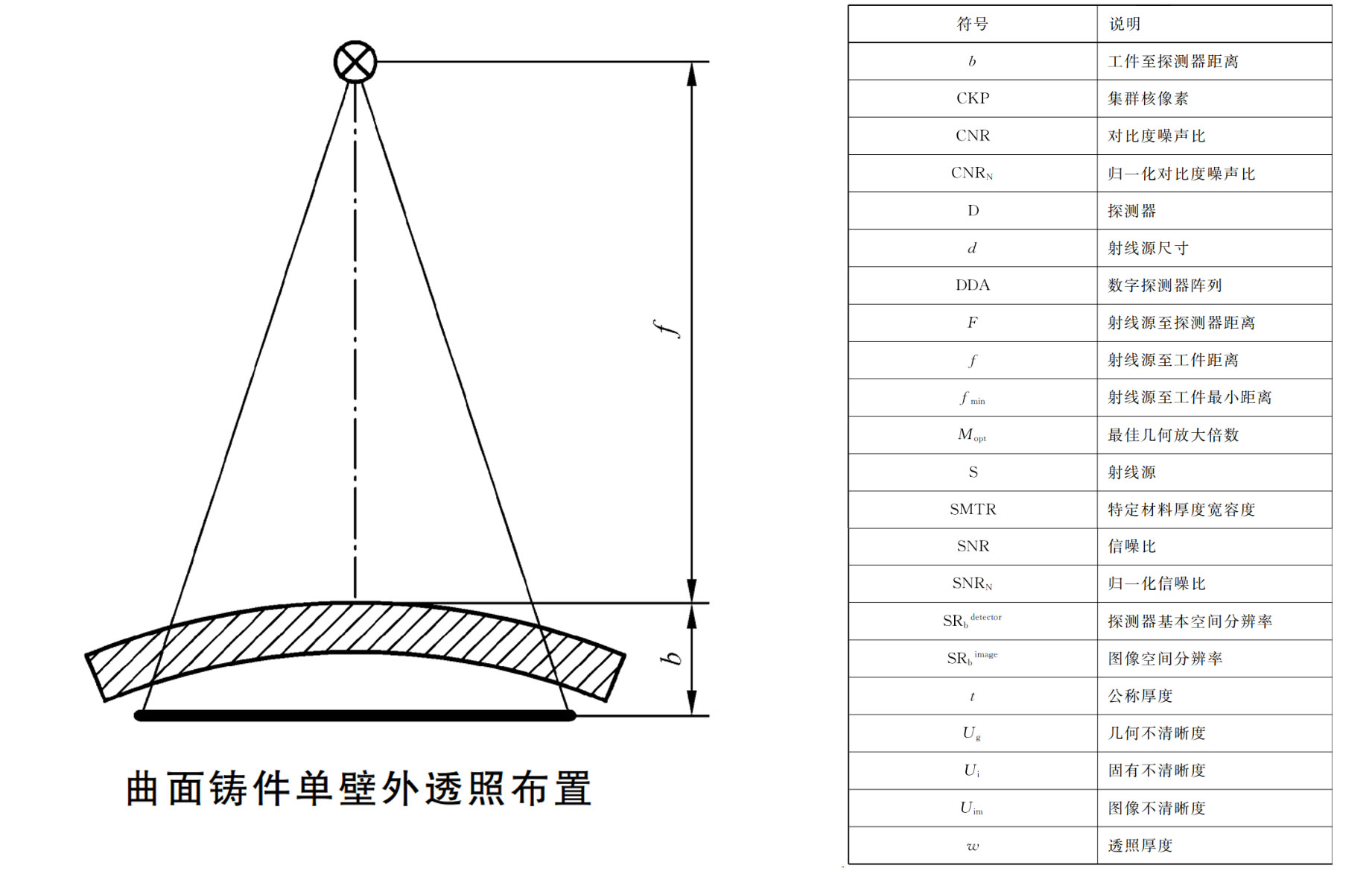
Fig.2: External single-wall radiographic setup for curved castings
Recommended focus: internal single-wall radiography for curved castings. In this setup, the radiation source is positioned on the concave side of the workpiece, while the detector is placed on the convex side. When conditions permit, this internal method should be prioritized to achieve better radiation direction and higher image clarity.
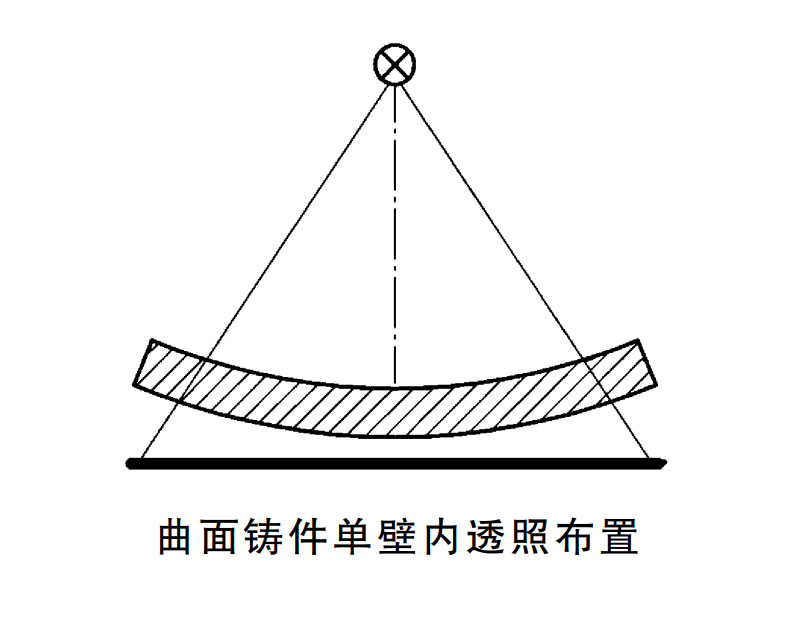
Fig.3: Internal single-wall radiographic setup for curved castings
III. Application Scenarios of Double-Wall Radiographic Setup
When structural constraints prevent the use of single-wall radiography, a double-wall radiographic setup must be adopted. The radiation source and detector are positioned on opposite sides of the inspected workpiece.
1. Double-Wall Single-Image Radiography (DWSI)
Under the premise of meeting sensitivity and unsharpness requirements, the distance from the radiation source to the inspected surface should be minimized as much as possible.
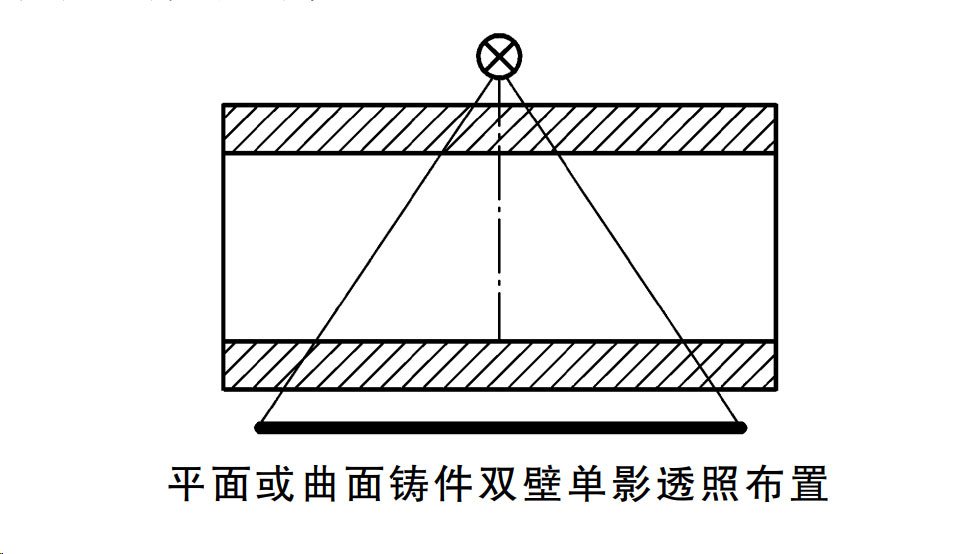
Fig.4: Double-wall single-image radiographic setup for flat or curved castings
2. Double-Wall Double-Image Radiography (Segmented and Integral Exposure)
When geometry makes other methods difficult to apply, or when better sensitivity can be achieved, double-wall double-image radiography may be used. Note: defects should be evaluated based on single-wall thickness. If wall thickness varies, the thinner section should be used as the reference.
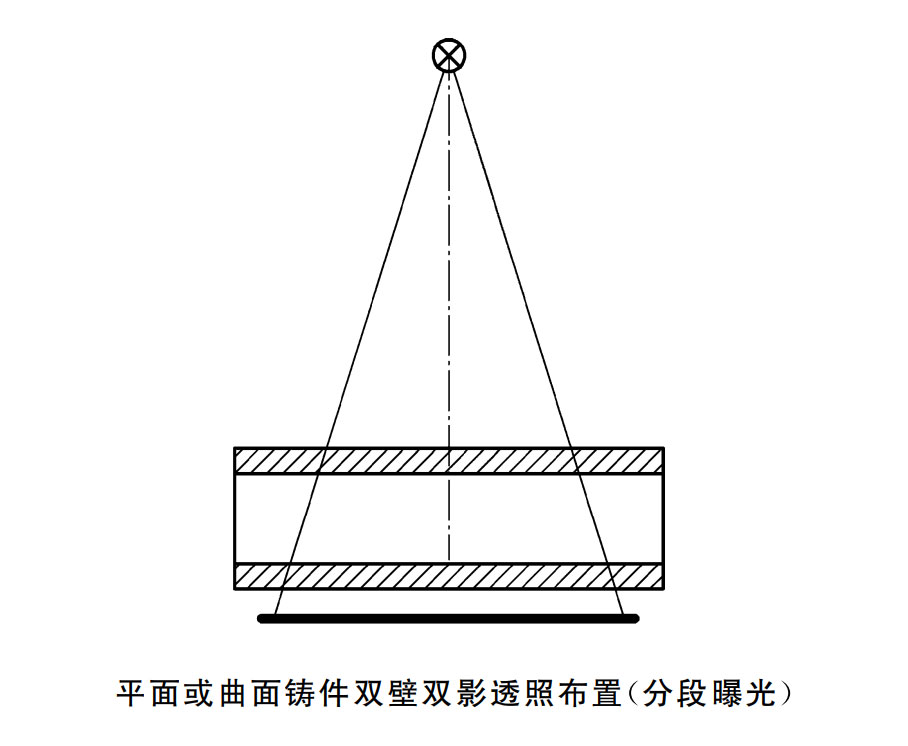
Fig.5: Double-wall double-image radiographic setup for flat or curved castings (segmented exposure)
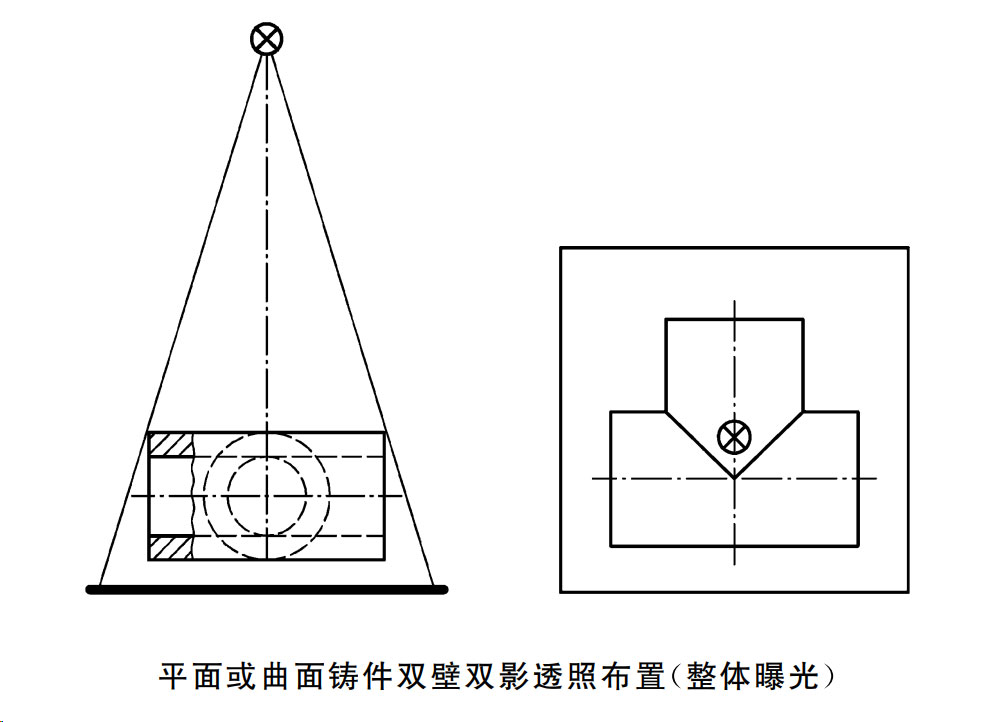
Fig.6: Double-wall double-image radiographic setup for flat or curved castings (integral exposure)
IV. Radiographic Strategies for Complex Geometry Castings
For complex structural castings commonly found in industrial production—such as edge, flange, ribbed, cross-shaped, and wedge-shaped structures—specific radiographic angles and setups are required to minimize image interference caused by structural overlap.
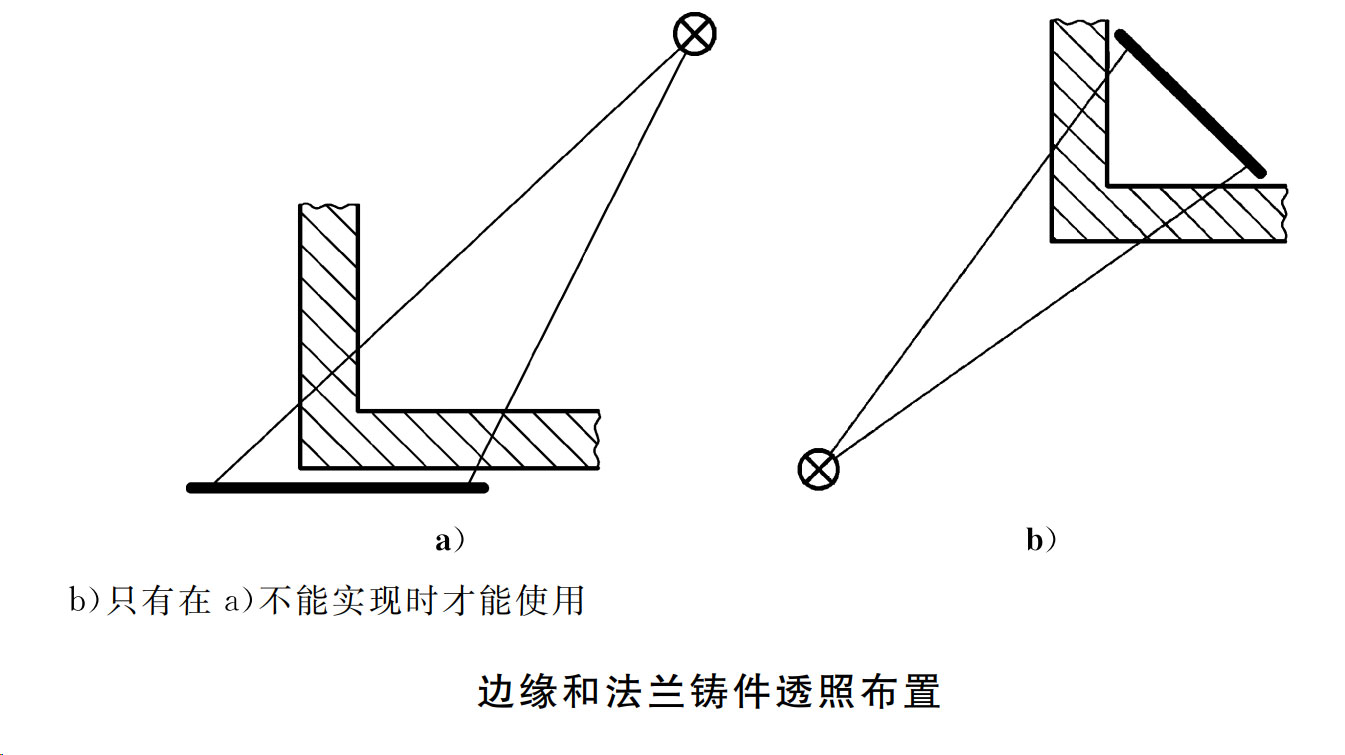
Radiographic setup for edge and flange castings
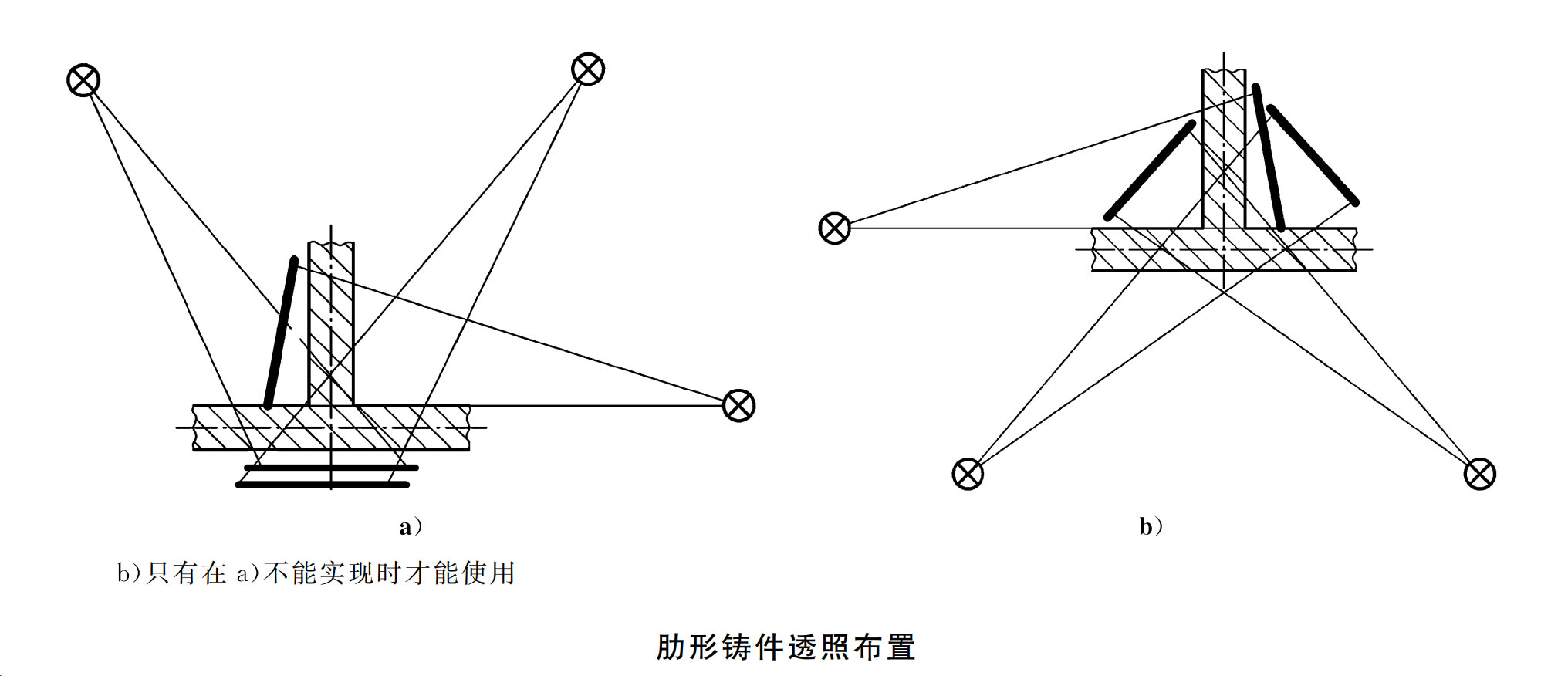
Radiographic setup for ribbed castings
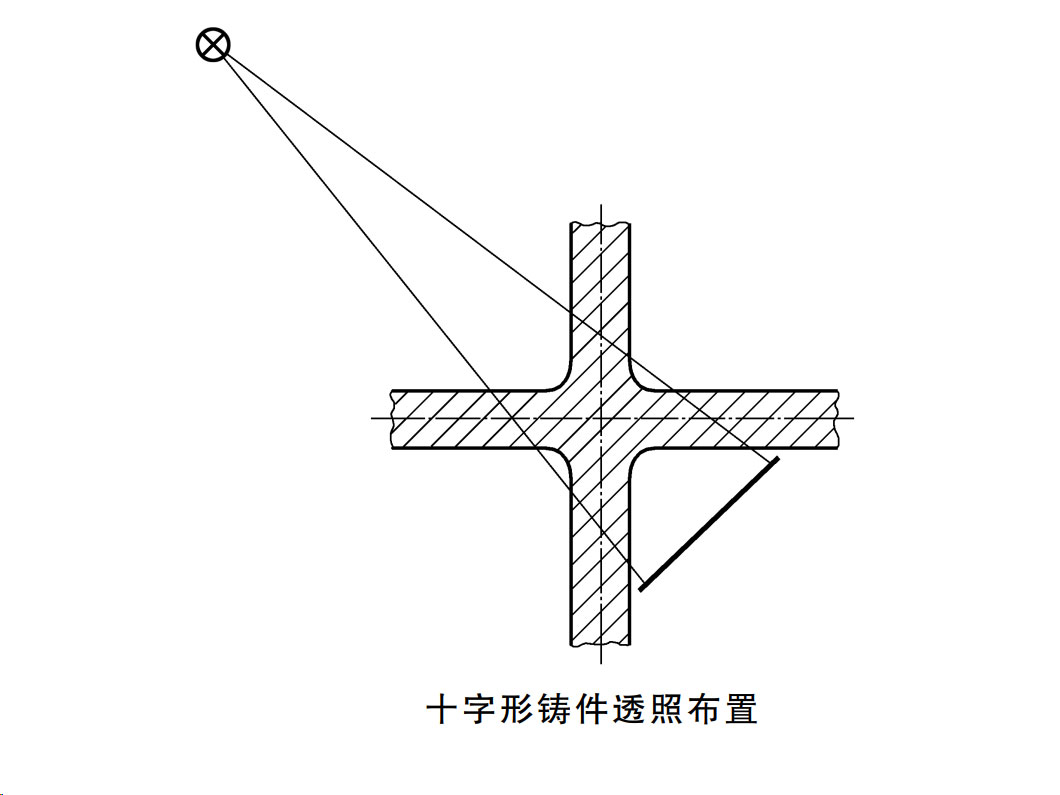
Radiographic setup for cross-shaped castings
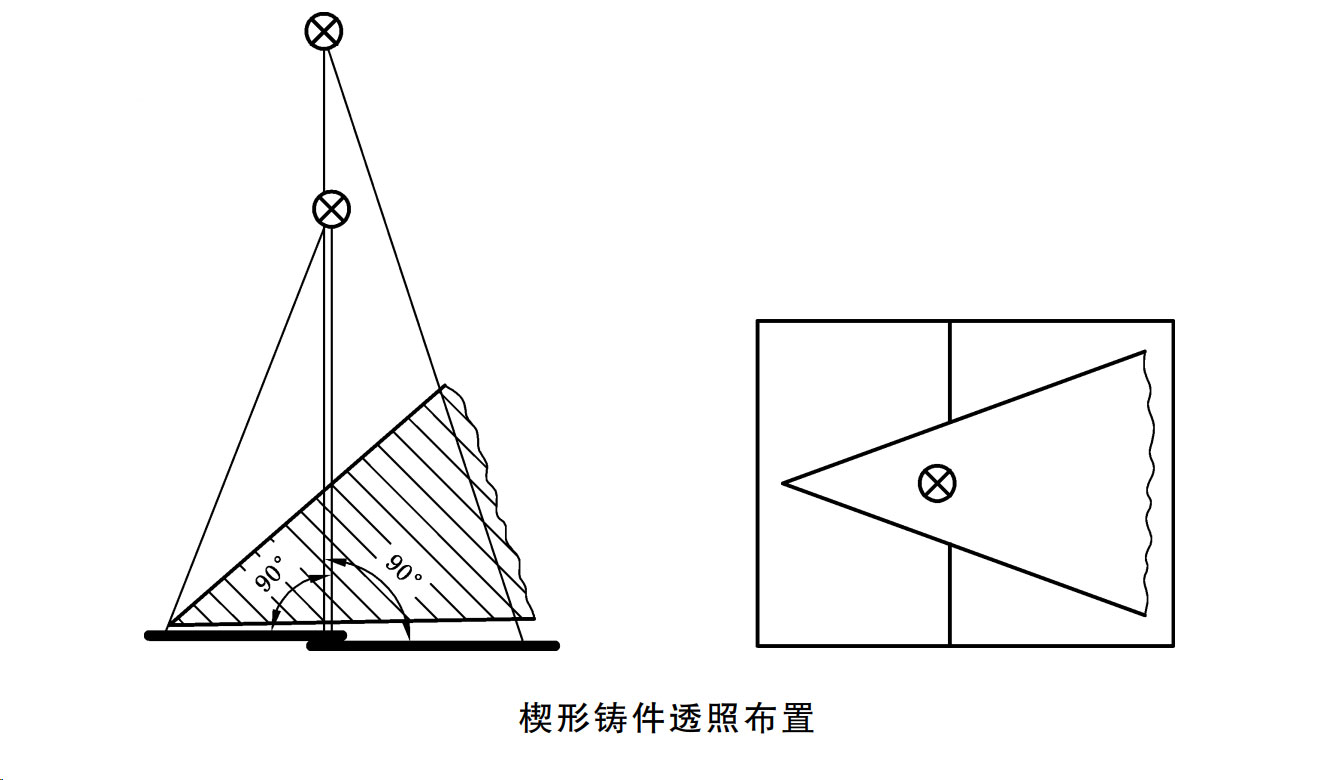
Radiographic setup for wedge-shaped castings
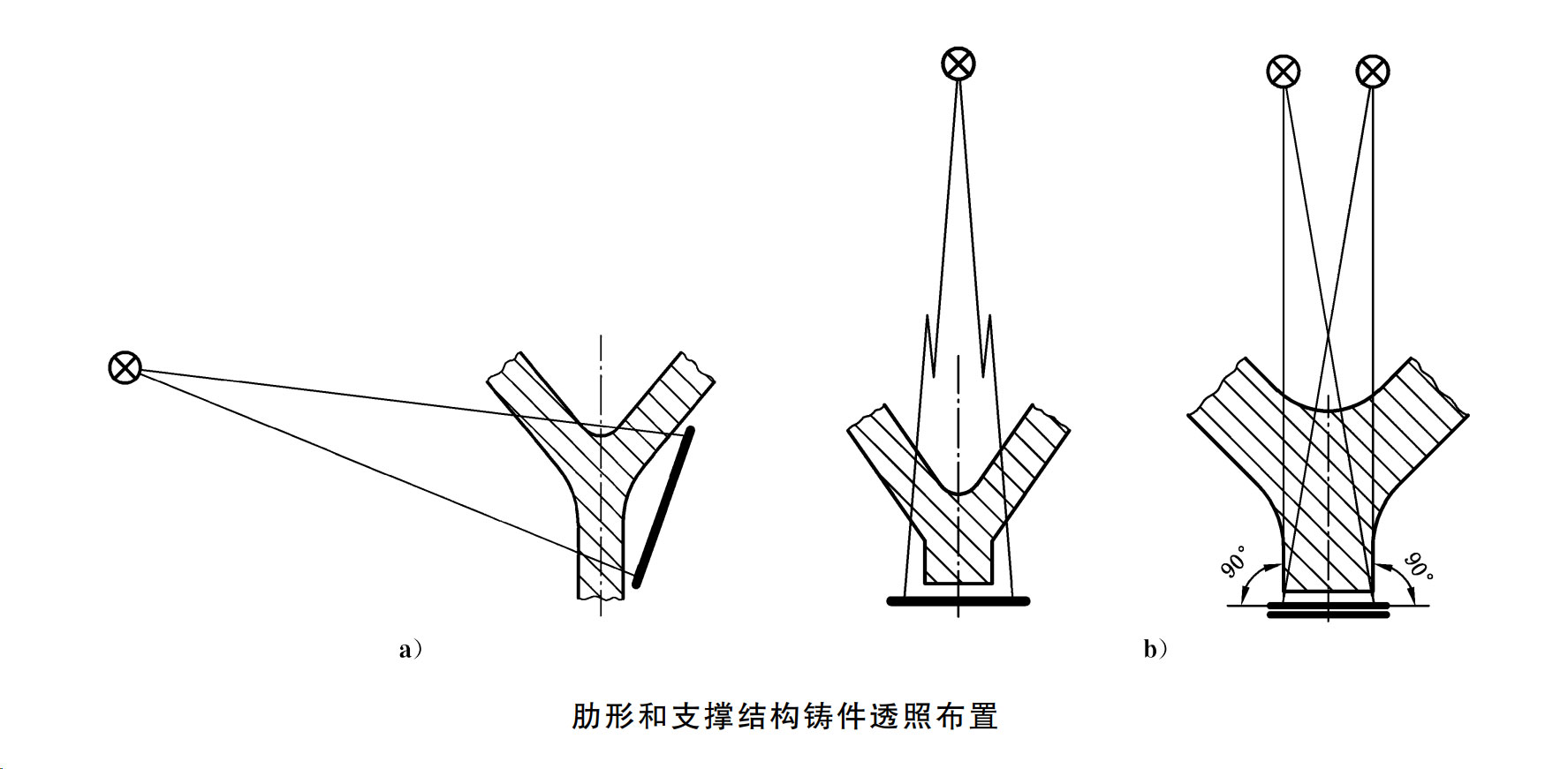
Radiographic setup for ribbed and braced castings
Improve Your Casting Inspection Capability
Selecting the correct radiographic setup is the key to obtaining high-quality X-Ray inspection images. Wahfei Technology provides high-performance industrial CT and X-Ray intelligent inspection solutions, equipped with advanced HDR algorithms and AI-based automatic defect detection technology, helping you efficiently address inspection challenges for various complex castings.