BGA X-Ray inspection technology and quantitative analysis of void defects
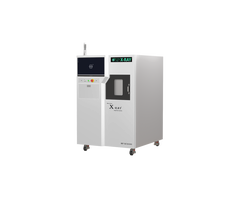
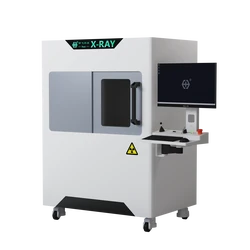
leveraging advanced x-ray fluoroscopic imaging technology combined with intelligent image algorithms, we transform the previously “blind-box-like” bga soldering quality—undetectable by the naked eye and conventional instruments—into clearly visible and precisely quantified reports. this not only helps manufacturers quickly intercept defective products from entering the market, but also enables reverse tracking of void ratio trends to guide continuous optimization of front-end smt placement machines and reflow soldering process parameters, thereby improving yield at the source and establishing a solid quality safeguard for the long-term reliability of customer products.
View More
2026-03-31

How X-ray inspection systems achieve real-time, non-destructive, and clear imaging of BGA solder joints to ensure soldering quality
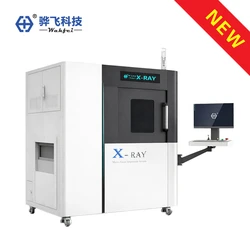
In consumer electronics, automotive electronics, and communication equipment, BGA (Ball Grid Array) has become a mainstream packaging method due to its high interconnect density and excellent electrical and thermal performance. However, BGA solder balls are completely hidden beneath the package, making them inaccessible to visual inspection and AOI. X-ray inspection systems utilize X-ray penetration to provide real-time, non-destructive, and clear visualization of internal BGA solder joints, making them essential for ensuring soldering quality. Wahfei’s self-developed X-ray inspection equipment, featuring ultra-high resolution and advanced image processing, delivers precise and reliable solutions for BGA inspection.
View More
2026-03-24

How to choose a reliable industrial X-Ray system that meets inspection requirements in 2026?
The core value of industrial X-Ray inspection lies in its ability to penetrate the surface of an object in a non-contact, non-destructive manner, revealing internal structures and defects to provide objective and reliable quality evidence for manufacturing processes. However, with the wide variety of systems available on the market—such as open-tube microfocus X-Ray, closed-tube industrial CT, SMT inline X-Ray, and high-speed 3D AXI—failing to clearly define inspection requirements before procurement can easily lead to issues such as “missed defects due to insufficient resolution” or “over-specification resulting in unnecessary cost.” This article systematically analyzes the selection criteria of different X-Ray systems from both technical principles and application scenarios, helping you make an investment decision that best fits your actual inspection needs.
View More
2026-03-20

How to choose a casting X-ray manufacturer? Evaluate radiographic setup design capability
For complex castings commonly found in industrial production—such as edge, flange, ribbed, cross-shaped, and wedge-shaped structures—specific irradiation angles and setups are required to minimize image interference caused by structural overlap to the greatest extent.
View More
2026-03-18

Is X-ray inspection equipment radiation safe? What are the safety standards? National standards | on-site measurements
Why can industrial X-ray equipment achieve low radiation? Modern industrial X-ray inspection equipment is designed with multiple technical means to reduce radiation leakage: • Fully enclosed lead shielding structure • Safety interlock protection system • Automatic ray stop protection mechanism • Multiple radiation leakage detection Under normal operating conditions, the radiation during equipment operation will not affect the health of operators.
View More
2026-03-14

Real-world Footage of an X-Ray Online Inspection System for 1.5–2 m FPC Nickel Tab Inspection
Learn how the X-Ray online inspection system precisely detects nickel tab solder joints on large-size FPC boards, enabling high-efficiency and high-accuracy automated quality control while overcoming the limitations of traditional inspection methods.
View More
2026-03-12

X-Ray Inspection of LED Chip Light Source Module Soldering | Includes Actual Effect Images
In high-precision manufacturing sectors such as LED lighting, display screens, and automotive electronics, soldering quality directly determines product reliability and service life. As core components in these applications, the integrity of solder joints within LED light source modules is paramount. However, traditional visual inspection and basic electrical testing often fail to detect concealed soldering defects such as cold solder joints, insufficient solder, or porosity. These latent issues may cause sudden failures post-delivery, severely impacting user experience and brand reputation. To fundamentally address this industry challenge, an increasing number of manufacturers are adopting advanced industrial X-ray inspection systems. These utilise non-destructive precision imaging technology to conduct comprehensive, in-depth quality assessments of LED chip soldering.
View More
2026-03-10

An electronic atomization device manufacturer introduces X-ray inspection systems for e-cigarette testing.
How a leading manufacturer uses advanced X-ray inspection for non-destructive precision testing of internal structures, solving core quality challenges such as e-liquid leakage and component misalignment to enhance product reliability and user experience. Discover the critical value of X-ray technology in e-cigarette production.
View More
2026-03-06

X-Ray Inspection Machine: High-Precision Fully Automatic Batch Inspection and Comprehensive Radiation Protection
Product quality is directly related to a company's market reputation and profit margins. With the continuous upgrading of product reliability requirements in consumer electronics, industrial control, medical equipment, and other fields, traditional inspection and simple electrical testing can no longer meet the demands. Many factory purchasing managers and business owners are looking for a solution that can both improve inspection accuracy and reduce operating costs. As an industry-recognized high-end inspection equipment, the X-Ray Inspection Machine is gradually becoming the new standard for quality control.
View More
2026-03-05

X-ray non-destructive testing of ceramic plates for micro-cracks, leaving no hidden fractures undetected.
X-ray inspection technology, with its unique penetrating capability, stands as the ideal choice for non-destructive testing of microcracks in electronic ceramic substrates. It can penetrate dense ceramic materials, revealing internal structural defects as high-resolution images, thereby exposing concealed microcracks. This serves not only as a quality control measure but also as a critical safeguard ensuring product stability under extreme operating conditions.
View More
2026-02-28

X-ray inspection for wire damage and connector breakage
For enterprises specialising in wire or connector production, the value of X-ray inspection extends far beyond merely “detecting defective products”. Its deeper significance lies in helping companies establish a quality feedback mechanism grounded in objective data. When a batch of wires consistently exhibits stress damage at identical locations, the accumulated data from X-ray images can directly pinpoint specific issues within the production process—whether it be improper pressure settings in the crimping dies or excessive bending along the routing path. This direct link from defect imagery to the root cause in the manufacturing process is something traditional inspection methods simply cannot provide.
View More
2026-02-25

3D-CT AXI Enables Non-Destructive Testing of IGBT Power Modules
Reliability is paramount for IGBT (Insulated Gate Bipolar Transistor) power modules in the semiconductor field. Defects such as voids within the welded layer pose critical risks to performance and lifespan. To address this challenge, Huafei has introduced a 3D-CT AXI inspection system specifically engineered for IGBT power modules. This equipment achieves industry-leading inspection speeds while reliably detecting manufacturing defects that are difficult to identify using conventional methods. It also offers outstanding operational convenience and maintainability.
View More
2026-02-07