



Real-world Footage of an X-Ray Online Inspection System for 1.5–2 m FPC Nickel Tab Inspection
- Pubdate 2026-03-12
X-Ray Inline Inspection for 1.5–2 Meter FPC Nickel Sheet Soldering: A New Standard for Precision Quality Control
Learn how X-Ray inline inspection systems precisely detect nickel sheet soldering on large-size flexible circuit boards, enabling high-efficiency, high-accuracy fully automated quality control while overcoming the limitations of traditional inspection methods.
In modern electronics manufacturing, Flexible Printed Circuit Boards (FPCs) are widely used in smartphones, wearable devices, medical equipment, and other fields due to their excellent flexibility and compact design advantages. Particularly in large-size flexible boards measuring 1.5–2 meters, the soldering quality of nickel sheets is directly related to the overall reliability and service life of the final product.
However, traditional solder inspection methods—such as visual inspection, point testing, and sampling inspection—often struggle when dealing with large-size and high-density solder joints. These methods are not only inefficient but can also easily miss hidden soldering defects, allowing large numbers of defective products to enter the market. To fundamentally solve this industry challenge, more and more manufacturers are adopting X-Ray inline inspection systems to achieve precise and efficient fully automated quality control for FPC nickel sheet soldering.
Core Challenges in Large-Size FPC Soldering
Compared with small-size circuit boards, 1.5–2 meter FPC flexible boards face unique challenges in soldering quality control:
Diversity and Hidden Nature of Soldering Defects
Insufficient solder wetting: Incomplete contact between solder and pad
Cold solder joint: Solder not fully melted
Insufficient solder: Inadequate solder coverage on the joint
Voids and inclusions: Internal defects within the solder
Nickel sheet warpage: Deformation of the nickel sheet caused by thermal stress
These defects are often difficult to detect with the naked eye, and traditional electrical testing cannot identify them either. More critically, these hidden defects may lead to sudden failures during product use, resulting in customer complaints, product recalls, and brand reputation damage.
X-Ray Inline Inspection System: The Solution for Precision Quality Control
X-Ray inline inspection systems utilize high-energy penetration technology to clearly present the internal structure of nickel sheet solder joints on flexible boards in a non-destructive manner.
1. Precise Internal Visualization
X-Ray imaging clearly reveals solder distribution, bonding wire connection status, nickel sheet position, and structural integrity, enabling the detection of micron-level defects.
2. Inline 100% Inspection Capability
The system can be directly integrated into the production line to achieve 100% product inspection coverage, with inspection time for large flexible boards taking only a few seconds.
3. Intelligent Data Analysis
The system automatically generates inspection reports, defect distribution maps, and statistical data to help quickly identify process issues.
Practical Applications of X-Ray Inline Inspection Systems
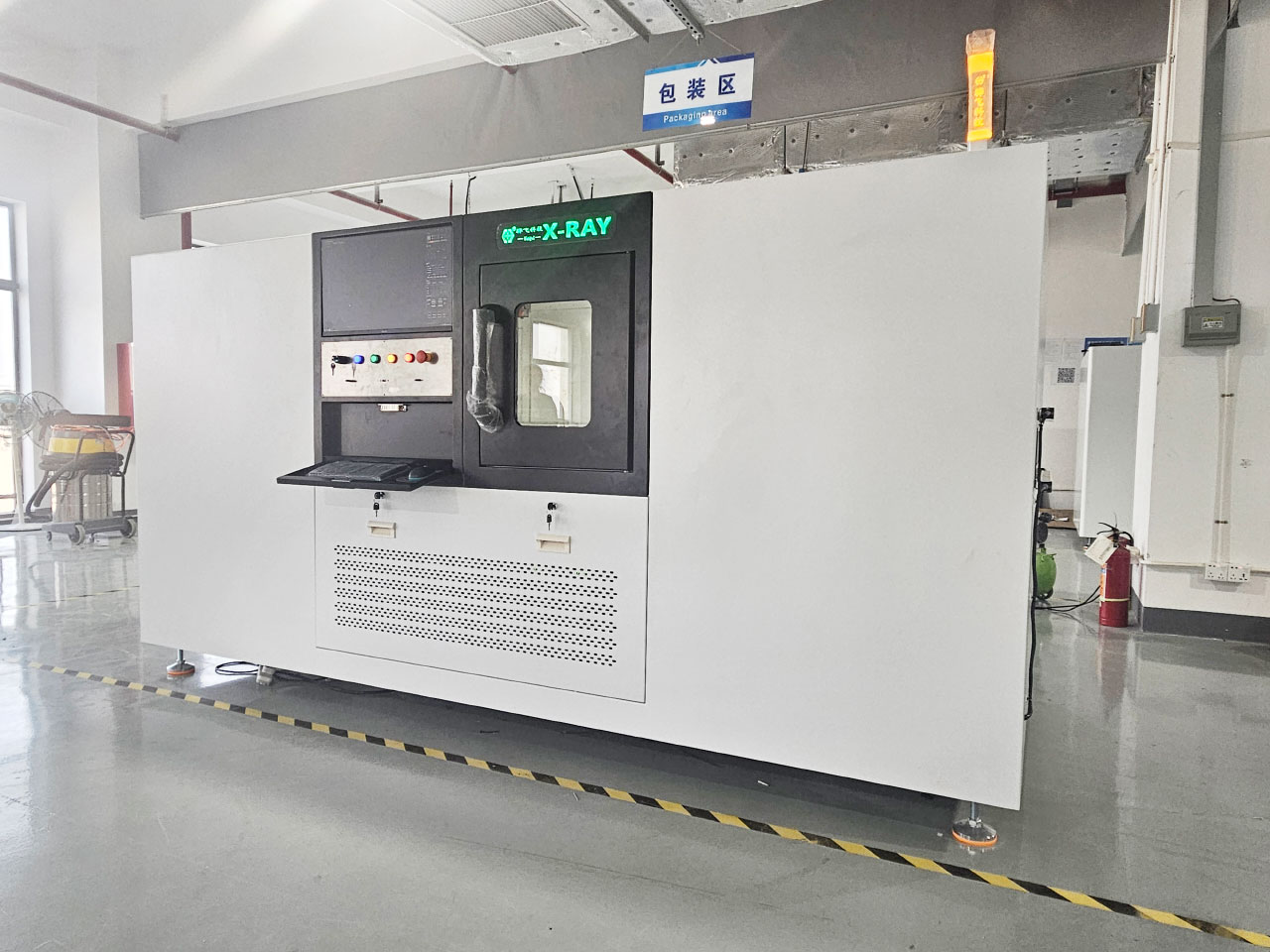


To learn more about practical application cases, please visit our related case page.
Inspection Method Comparison
Metric | Traditional Inspection | X-Ray Inline Inspection | Improvement |
|---|---|---|---|
Inspection Coverage | 30-50% | 100% | ↑100% |
Defect Detection Rate | 60-70% | 99%+ | ↑30%+ |
Inspection Time | 5-10 minutes | 5-10 seconds | ↓99% |
The X-Ray inline inspection technology introduced in this article has been widely applied in precision manufacturing industries such as FPC, electronics, and automotive.