BGA bonding: How Solder Balls Form Board Interconnections
BGA bonding describes the formation of electrical and mechanical connections between the solder balls beneath a ball grid array package and the corresponding pads on a printed circuit board (PCB). The balls create an array of compact interconnects under the package body. Their hidden location makes the joint structure difficult to assess from the outside, but the bonding concept itself begins with the relationship between the ball, pad, surface condition, and assembly process.
From contact to a metallurgical joint
During assembly, the package is positioned so its solder balls align with the PCB pads. Heating brings the solder into a molten state; when the surfaces are suitable and contact is maintained, the solder can wet the pad and package-side connection. As the assembly cools, the solder solidifies and forms the joint that connects the two sides. The exact materials and process conditions depend on the package, board, solder system, and manufacturing requirements, so a single universal recipe should not be assumed.
Wetting is central to this process. It is influenced by surface cleanliness and finish, solderability, alignment, and the way heat is delivered across the assembly. If a surface is contaminated or the solder does not spread as intended, the resulting connection may differ from the desired joint. Likewise, package and board movement during heating and cooling can affect alignment and the final geometry.
Variables to understand
Useful process discussions consider more than a temperature setting. Relevant variables can include the package and PCB design, pad geometry, ball and paste condition where applicable, surface finish, placement accuracy, heating profile, board support, and cooling behavior. These factors interact; changing one may alter how the assembly responds elsewhere. Process development therefore relies on the specific materials and product design rather than on unsupported general limits.
A practical review begins by documenting the package and board combination, the intended joint requirements, and the process conditions already in use. Representative assemblies can then be evaluated using appropriate quality methods for the product. This is a process-oriented view of interconnect formation, not an X-ray inspection guide or a repair procedure.
Shenzhen Wahfei Technology Co.,Ltd. uses BGA bonding here to refer to the assembly concept of forming ball-to-pad interconnections. Clear material and process context helps teams discuss joint formation without treating one set of conditions as universal.
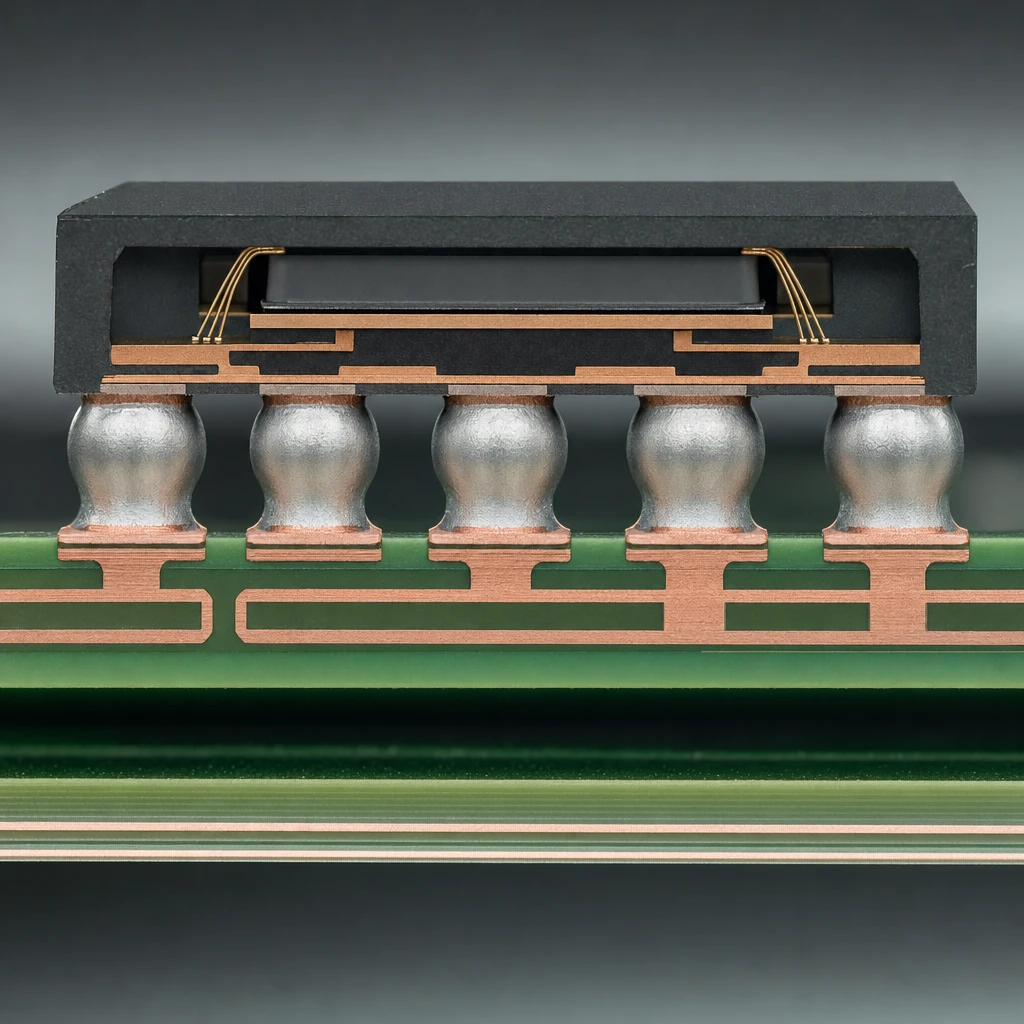
a confirmed BGA package-to-PCB cross-section.