NDT X Ray: Why Defect Orientation Matters
NDT x ray inspection uses penetrating radiation to examine internal structure without cutting a component open. A visible indication forms when a feature changes the transmitted signal enough to distinguish it from the surrounding image. The size of a discontinuity matters, but its orientation to the beam can be just as important.
A thin crack may produce little image contrast
A tight planar crack may remove very little material along the beam path when viewed across its narrow opening. The resulting signal difference can be too small to identify. A beam direction closer to the crack plane may pass through a greater length of the opening, improving visibility when the geometry permits. ASNT's radiographic testing guidance identifies discontinuity orientation as an important limitation of the method.
A rounded void and a thin crack of similar overall length therefore need not be equally visible. More magnification alone cannot recover information that the exposure has not captured with adequate contrast. Material thickness, overlapping structures, detector performance, and noise also affect the result.
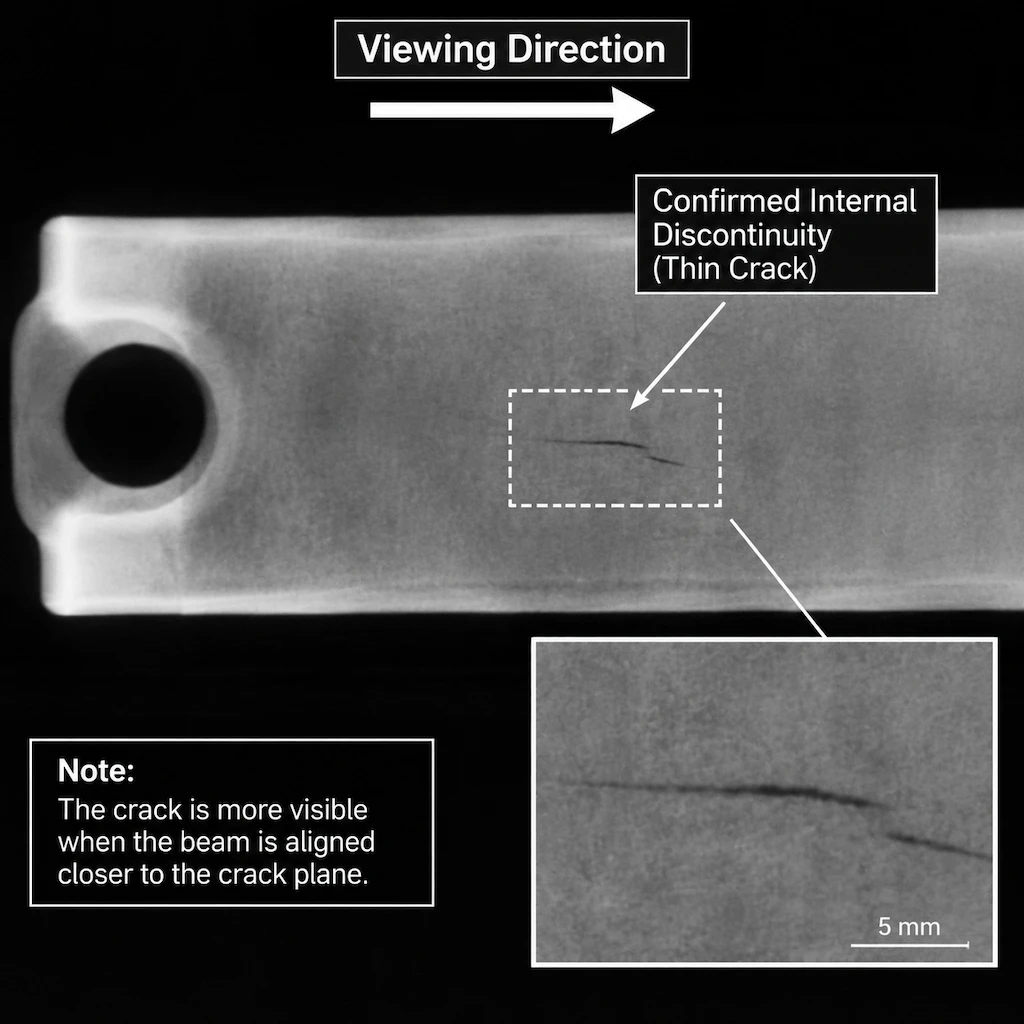
radiograph with a confirmed internal discontinuity and documented viewing direction.
Define the target discontinuity before choosing the view
An inspection plan should connect the suspected defect type to the available beam directions. Additional views or a complementary NDT method may be appropriate when planar flaws are the main concern. Shenzhen Wahfei Technology Co.,Ltd. manufactures industrial X-ray inspection equipment. Share the component geometry and target discontinuity when discussing an application so that sample evaluation addresses the actual inspection question. A report stating that no indication was observed should remain tied to the coverage and sensitivity of the examination.