AOI Machine: Review False Calls Without Hiding Real Defects
An AOI machine flags visible assembly conditions that fall outside its programmed criteria. A flagged location becomes a false call when review establishes that it is acceptable under the applicable requirements. The number of flags alone therefore cannot show how well the inspection program distinguishes acceptable variation from actual defects.
Use reviewed examples to explain repeated flags
Lighting reflections, component appearance, board positioning, and inspection-window placement can influence optical results. When one location repeatedly triggers review, examine its captured images and confirmed outcomes before changing the program. An acceptable component variant and an incorrectly positioned component may require different treatment even if both initially generate the same alarm category.
Loosening a threshold can reduce review work, but it can also reduce sensitivity to a relevant defect. Evaluate a proposed change against representative acceptable assemblies and confirmed defective examples. Keep the review unit consistent when reporting results: flagged locations and flagged boards are different denominators. A lower false-call count is useful only alongside evidence that the required defect coverage remains effective.
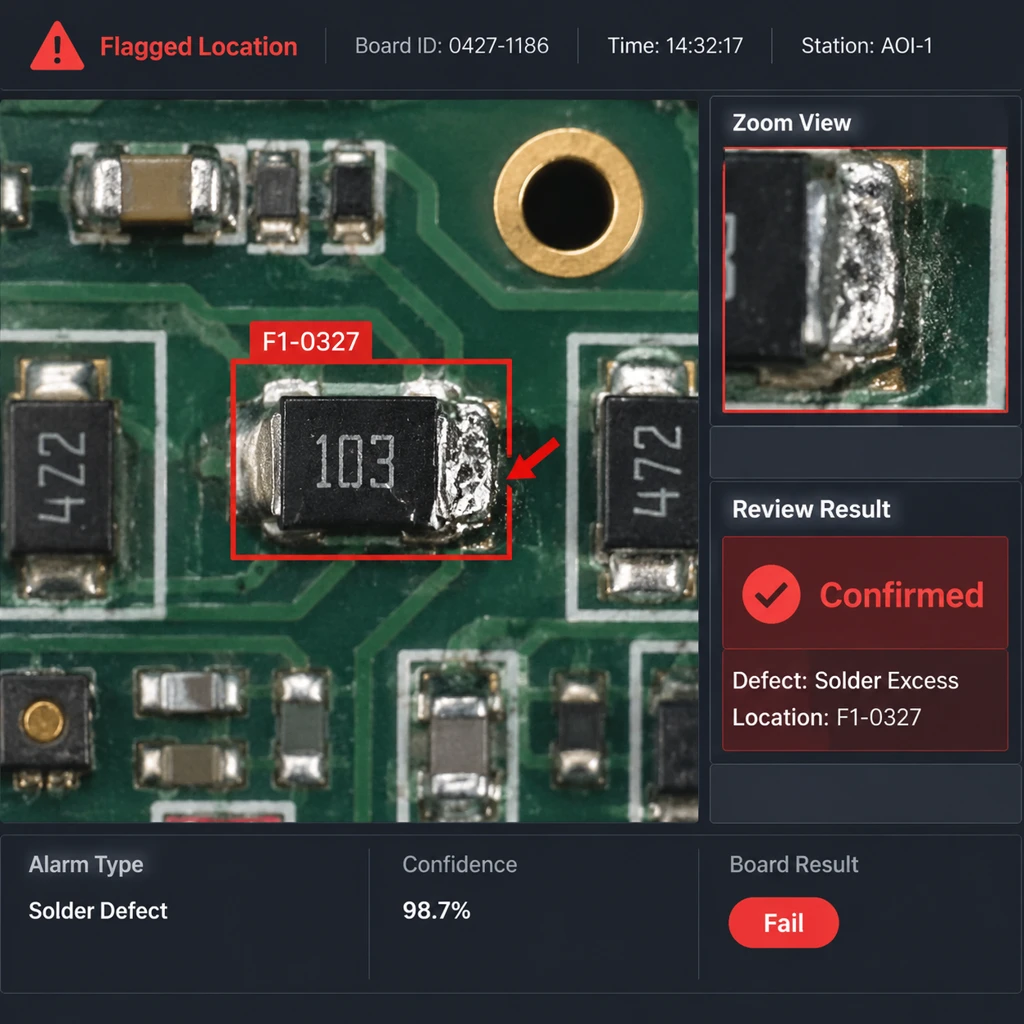
optical inspection image of a flagged PCB location with the final review outcome confirmed.
Route the question to a method that can answer it
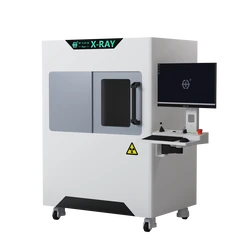
Optical review addresses features accessible to the camera. An unresolved question about hidden solder structure may need X-ray evidence, while electrical behavior requires an appropriate electrical test. Shenzhen Wahfei Technology Co.,Ltd. manufactures industrial X-ray inspection equipment. Its equipment can be evaluated for suitable hidden-structure applications alongside the factory's optical inspection workflow; an AOI machine is a separate equipment category.