What Is Automated Test Equipment? A Practical Guide for Electronics Manufacturers
What Is Automated Test Equipment? A Practical Guide for Electronics Manufacturers
Automated test equipment (ATE) applies controlled electrical signals to a device under test (DUT), measures its responses, and compares the results with defined limits. In electronics manufacturing, ATE can refer to semiconductor test systems or to automated electrical test setups for circuit boards. It is different from automated optical inspection (AOI) and automated X-ray inspection (AXI), which inspect visible or internal physical features rather than directly verifying electrical behavior.
What is automated test equipment?
Automated test equipment is a hardware-and-software system that runs repeatable tests on electronic devices with limited manual intervention. Depending on the application, it can generate voltage, current, digital patterns, or other test signals; measure a device’s response; and report whether the results meet the test program’s specified criteria.
The term is used broadly. Semiconductor manufacturers often use “ATE” to mean dedicated IC test systems. In board manufacturing, people may use it more generally for automated electrical test equipment, including in-circuit or functional test systems. The exact meaning depends on the product being tested and the production context.
An ATE system typically includes test instruments or measurement channels, a controller, test software, an electrical interface to the DUT, and a method for handling or positioning the product. The configuration depends on the device, required measurements, production volume, and test coverage.
Main types of ATE
Semiconductor ATE tests chips and other semiconductor devices
Semiconductor ATE evaluates integrated circuits against a test program. It may be used for wafer-level testing before chips are separated from the wafer, and for final testing after packaging. The tester applies electrical stimuli through an appropriate interface, such as a probe card or device test interface, then measures device responses.
The required tester capabilities depend on the device. Digital logic, memory, mixed-signal devices, and radio-frequency components can require different signal generation and measurement functions. Semiconductor ATE is selected around the device’s electrical specifications, test program, interface, and production requirements.
Board-level electrical test checks circuit boards
Board-level electrical test systems evaluate printed circuit boards or assembled electronic products. Common approaches include:
- In-circuit test (ICT): Checks selected electrical properties of components and connections on an assembled board, subject to access and fixture constraints.
- Flying-probe test: Uses movable probes to make electrical measurements without a dedicated bed-of-nails fixture. Test time and coverage depend on board design and test requirements.
- Functional test: Powers a board or product and checks whether it performs defined functions under specified test conditions.
These methods answer electrical questions, but they do not all provide the same coverage. A functional test can show that a product behaves correctly for the tested cases; it does not necessarily identify every component-level defect or reveal the physical condition of a hidden joint.
What ATE can and cannot tell you
ATE provides evidence about the electrical behavior it measures, under the test conditions and limits defined by the test program. It can identify failures such as an open or short circuit when the relevant path is exercised and the test is configured to detect it. An open bond is an electrical discontinuity; it should not be described as passing a continuity test that covers that connection and has suitable limits.
A passing electrical result is not a complete assessment of physical construction or long-term reliability. For example, a solder joint may remain electrically conductive during a test while containing an internal void or having less bonded area than desired. Whether such a condition is acceptable depends on the joint design, application, inspection criteria, and reliability requirements.
Electrical test coverage also depends on access, fixture quality, measurement resolution, test-program quality, and which operating conditions are exercised. A system cannot identify a failure mode that the test neither stimulates nor measures.
Where AXI fits alongside electrical test
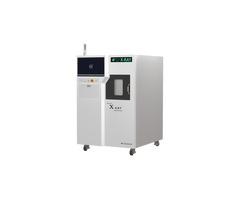
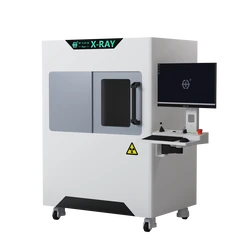
Automated X-ray inspection (AXI) uses X-ray images to inspect internal structures that are hidden from ordinary optical inspection. On assembled boards, it can help examine features such as solder joints beneath components, including certain ball-grid-array and bottom-terminated packages. Automated optical inspection (AOI), by contrast, examines optically visible features.
AXI is an inspection method, not a substitute for electrical ATE. Electrical testing asks whether a circuit or device produces the expected electrical response under defined test conditions. X-ray inspection asks whether selected internal physical features appear consistent with the inspection criteria. Neither method answers every quality question on its own.
Used together, the methods provide complementary evidence. If electrical test identifies a failure, X-ray may help locate or characterize a visible internal structural anomaly. If electrical test passes but process or reliability concerns remain, X-ray may reveal physical conditions that electrical measurements alone do not show. X-ray findings may require engineering review; an image does not automatically establish electrical performance or predict field life.
How to evaluate an ATE or inspection setup
Start with the product and the failure modes that matter, not with a machine label. Clarify what the DUT is, which failure modes must be detected, what the pass limits mean, achievable coverage and cycle time, traceability needs, and where electrical test should be complemented by AOI, AXI, or additional analysis.
A useful evaluation connects each quality risk to a specific detection method and an acceptance decision. Avoid treating a single pass/fail result as proof that every electrical, structural, and reliability concern has been addressed.
Frequently asked questions
Is ATE only used for semiconductor testing?
No. “ATE” commonly refers to semiconductor test systems, but the term is also used more broadly for automated electrical test systems. In board manufacturing, ICT, flying-probe, and functional test are examples of automated electrical testing approaches.
Is AXI a type of ATE?
Not in the electrical-test sense used here. AXI is automated X-ray inspection: it evaluates internal physical features in X-ray images. ATE applies and measures electrical signals. A manufacturing line may use both because they examine different aspects of product quality.
Can a board pass electrical test and still have a solder-joint concern?
Yes. A board can meet electrical test limits while a joint contains a physical condition, such as an internal void or reduced bonded area, that merits review under the product’s criteria. A confirmed open connection is different: if the affected path is exercised by an appropriately configured electrical test, it should be detected as an electrical failure.
Does X-ray replace functional test?
No. X-ray images physical structures; functional test checks electrical behavior for the tested functions and conditions. The appropriate combination depends on the product and its quality requirements.
About us
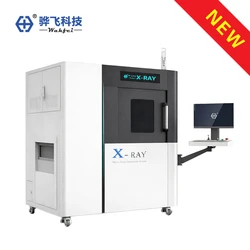
Shenzhen Wahfei Technology Co.,Ltd. manufactures industrial X-ray inspection systems, not electrical ATE. Industrial X-ray inspection can complement electrical test by providing visibility into selected internal structures, while electrical test evaluates electrical behavior under its defined test conditions.
For overseas customers, Wahfei can discuss inspection requirements and arrange sample evaluation. Product suitability should be confirmed with representative samples and agreed criteria.
WhatsApp / Phone: +86 189 0297 8624
Email: szwahfei@gmail.com
Website: https://www.szwahfei.cn/