2D X-ray vs. 3D CT: Which Inspection Method Is Right for Your Application?
Choose 2D X-ray when one or more projection views show the target feature clearly enough to make a repeatable inspection decision. Evaluate 3D computed tomography (CT) when the decision depends on the feature’s depth or on separating structures that overlap in projection.
Use 2D X-ray When the Projection Answers the Question
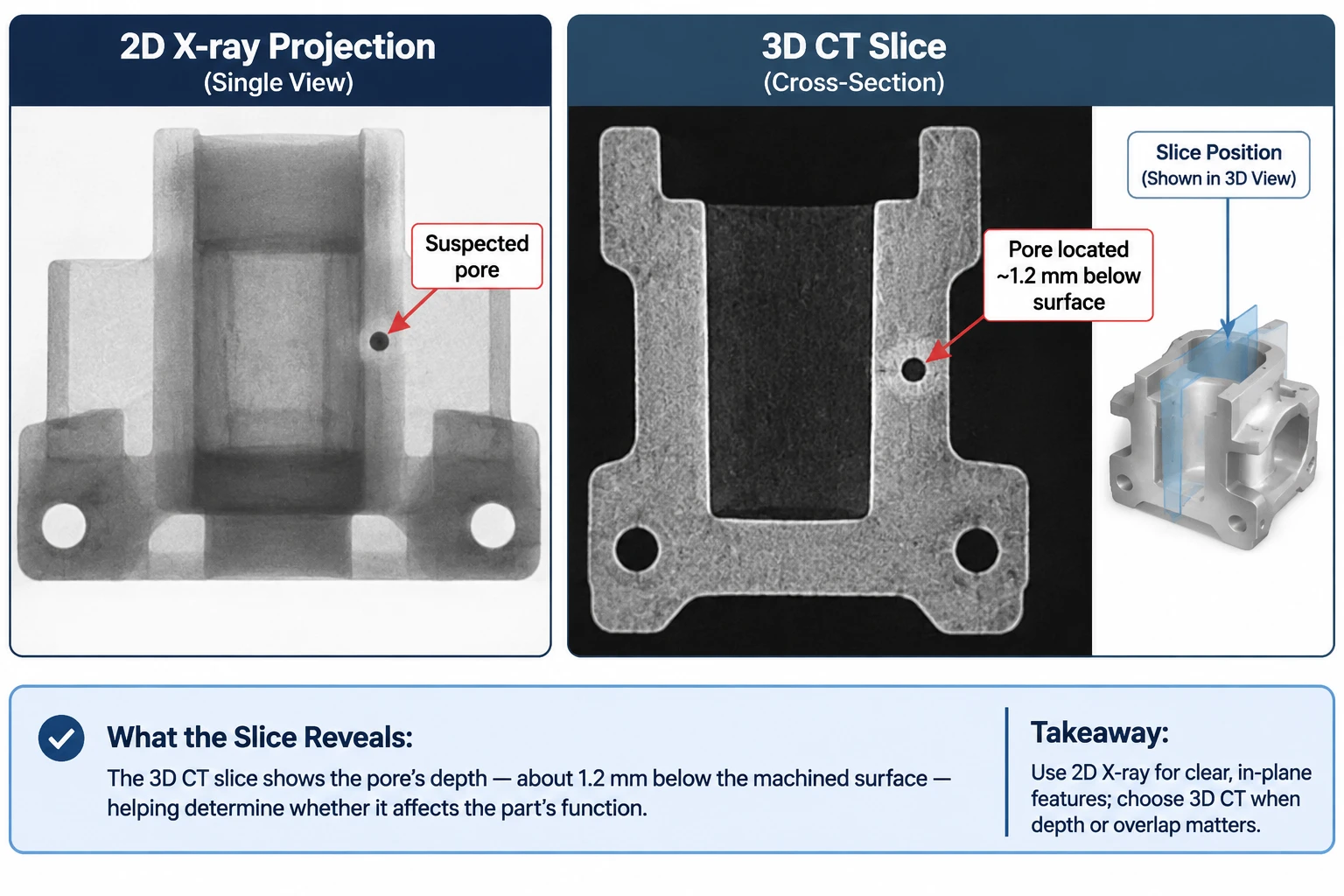
A 2D projection combines features along the X-ray beam path into one image. For a routine check such as verifying the presence and position of an internal insert, a clear projection may provide all the evidence you need. If a housing feature obscures the insert, try a second viewing angle before adding a CT scan to the workflow. Projection imaging avoids the time needed for volume reconstruction.
Evaluate 3D CT When Depth Affects the Decision
CT reconstructs a volume from multiple X-ray projections. Virtual slices can help an engineer determine whether a suspected pore in a casting lies near a machined surface or deeper in the part. The method is useful when that location affects the review. Check that the part fits the scan setup and that attenuation and reconstruction artifacts still allow the feature to be resolved. Voxel size describes the sampling of the reconstructed volume. Verify actual feature visibility on representative parts.
Compare Both Methods on Real Parts
Define the smallest relevant feature, where it can occur, and the acceptance criteria before running a trial. Use representative acceptable parts and parts with known or independently verified defects when available. Compare how consistently reviewers reach the same decision and record the full time from loading the part to recording a result, including reconstruction and review where applicable. If 2D covers routine checks and CT resolves unclear findings, use both in a tiered workflow.
To discuss a sample evaluation with Shenzhen Wahfei Technology Co.,Ltd., share your part dimensions, material, target feature, and inspection time budget.